Every pull, measured and kept.
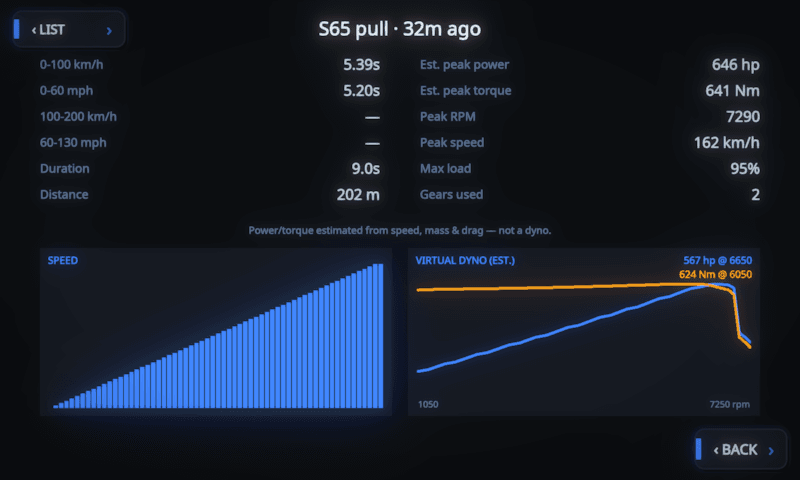
A performance meter, virtual dyno and lap timer in one. The unit watches the throttle, so go wide open and the pull is detected, timed and logged automatically: 0-60 and quarter-mile splits, a power estimate and a virtual dyno curve, all computed from data your own engine produced.
A power curve from every logged pull.
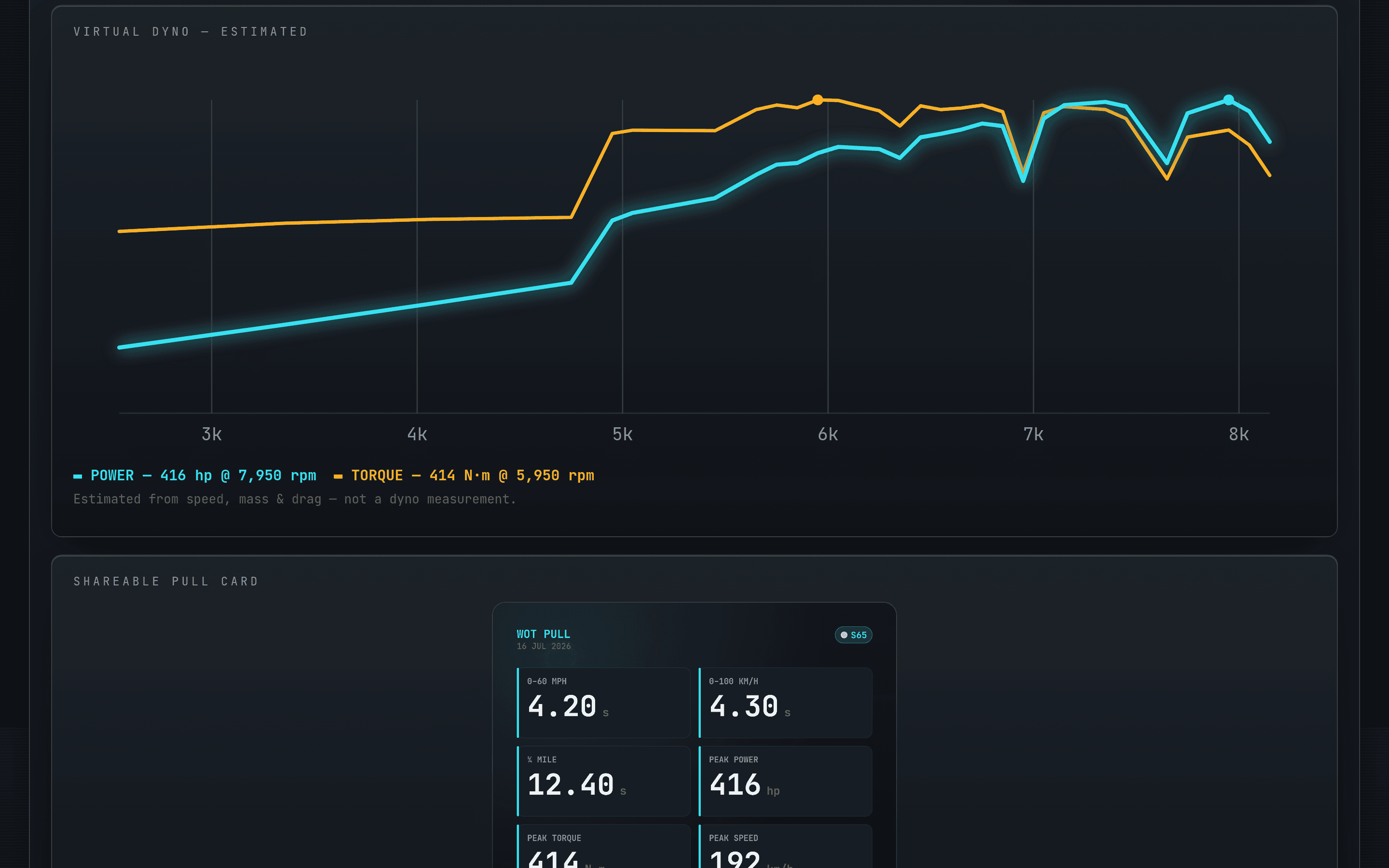
Power and torque against RPM, computed on demand from the pull's own samples using your car's weight and drag. No rollers, no booking, and no pretending it is a dyno.
- Computed, not sketched. The curve comes from the logged speed trace, shift dips included.
- Peak callouts. Peak power and torque marked with the RPM they arrived at.
- Honest by design. Every figure carries the “estimated, not a dyno measurement” line.
- Before and after. Pulls are kept, so a tune or an intake gets a like-for-like comparison.
Logged on the device. Reviewed anywhere.
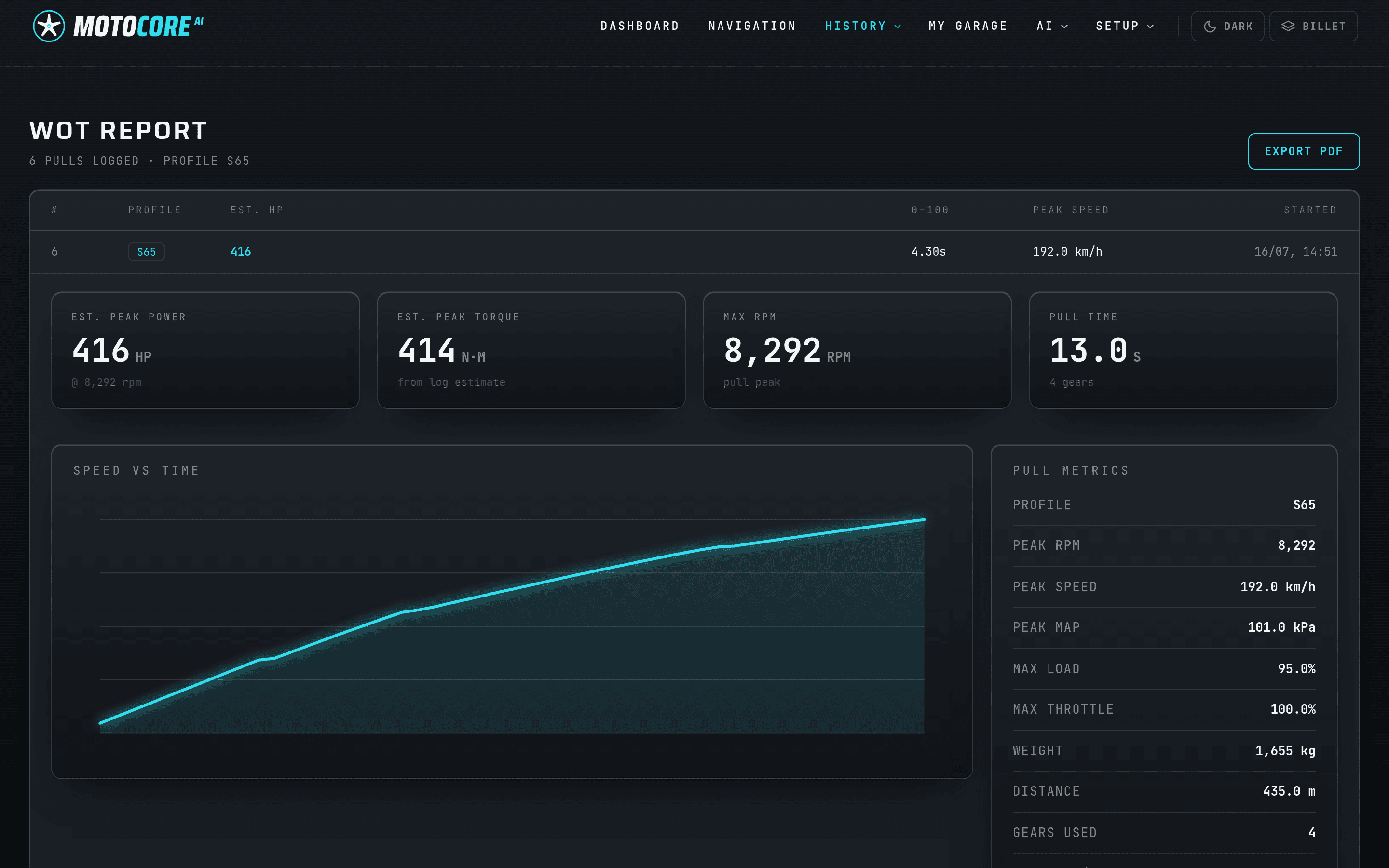
Every detected pull lands in the unit's own web app. Open a browser on the unit's WiFi and the full history is there, no cloud account required.
- Full metrics per pull. Peak RPM, speed, manifold pressure, load, throttle, distance and gears used.
- 0-100 and 0-60 splits. Plus 100-200 and 60-130 when the pull runs long enough.
- Export. A PDF per report, a shareable pull card per pull.
- Weight-aware. Each car in the garage carries its own mass for the power estimate.
Stopwatches that read the car, not your thumb.
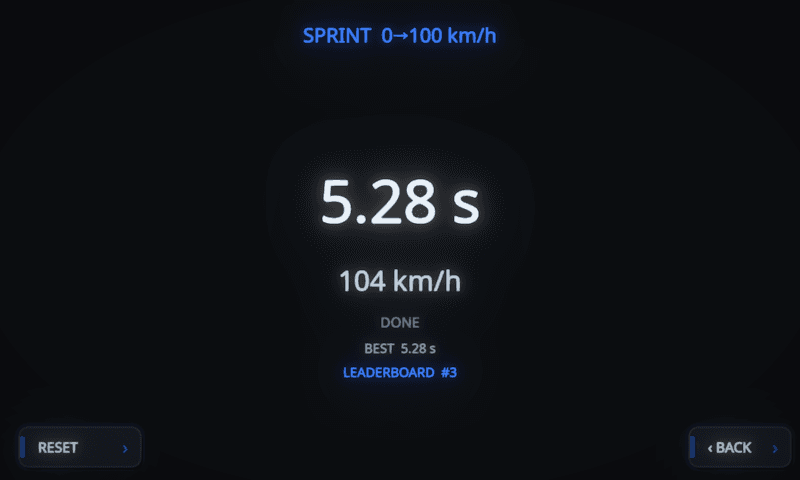
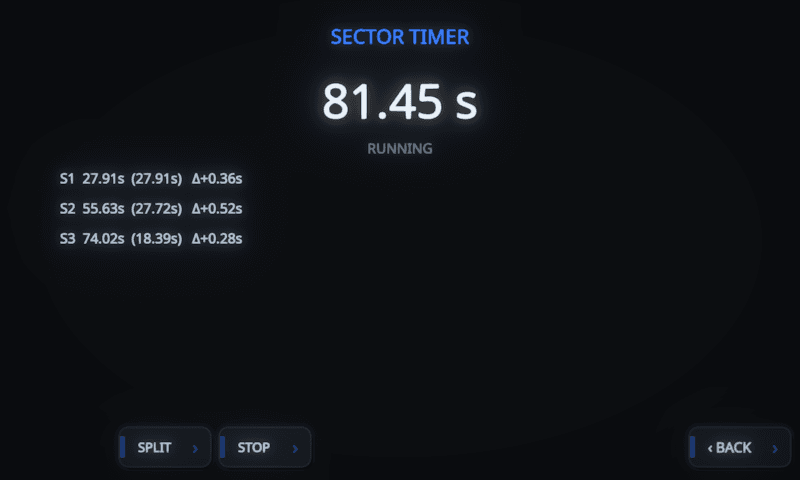
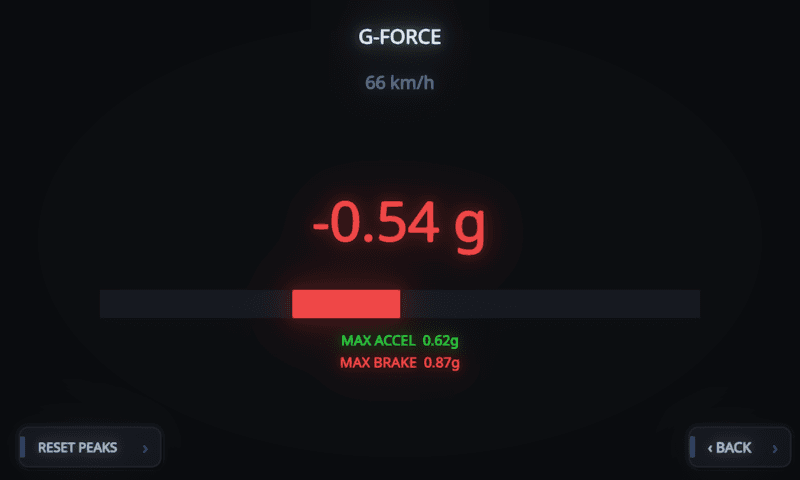
Sprint, sector and G tooling run on the unit itself, timed from the OBD stream. Armed once, then hands off, and your reaction time is safe from scrutiny.
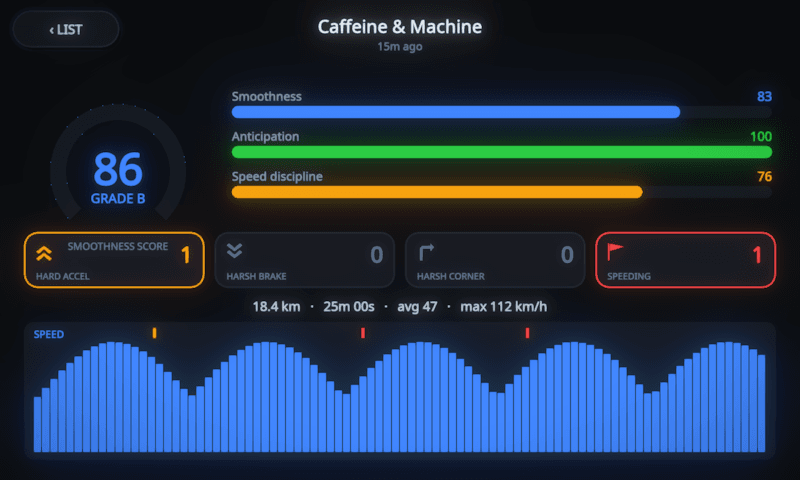
Every journey scored. Kindly, but honestly.
Each road journey ends as a saved report: smoothness, anticipation and speed discipline, with the harsh moments counted rather than guessed. It marks your driving, but at least it never puts the results on the fridge.
- Smoothness. Harsh braking, acceleration and cornering, normalised per distance so a long run is judged fairly.
- Speed discipline. Measured against the actual posted limits when you navigate; marked not-applicable rather than assumed perfect when there is no limit data.
- Track mode exempts you. A circuit is aggressive by design, so track driving is never scored.
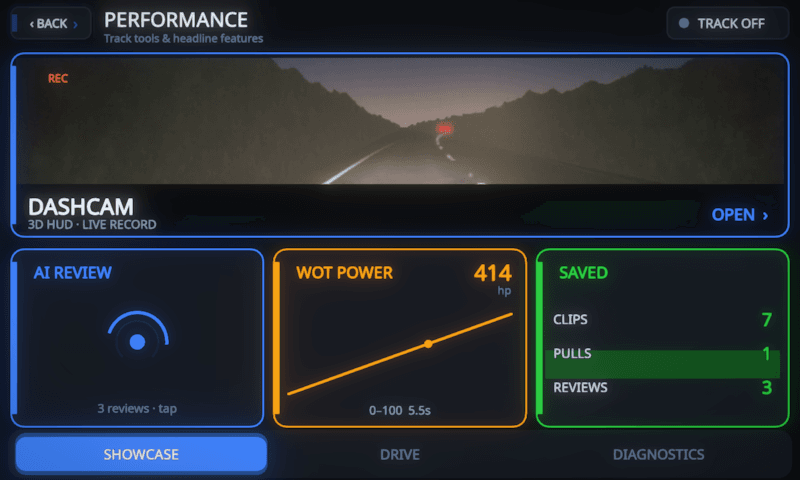
One screen for the whole discipline.
The performance hub gathers the headline numbers, whether that's the last pull, saved clips or AI reviews, with the drive tools and engine diagnostics one tab away.
- Showcase tab. Dashcam, latest WOT power and everything saved, at a glance.
- Drive tab. Sprint, sector, G-meter, gear indicator and fuel economy.
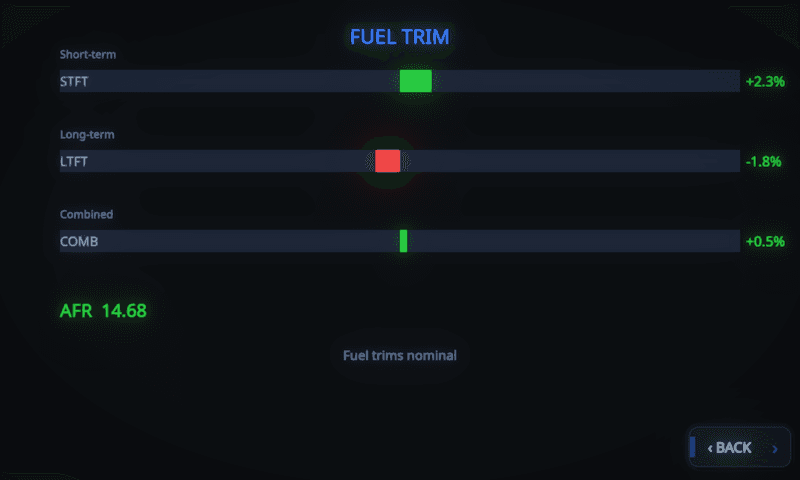
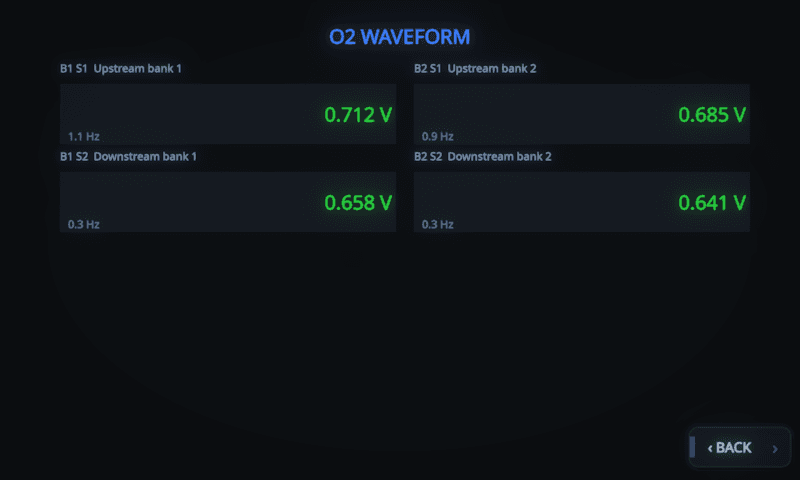
- Diagnostics tab. Fuel trims, O2 waveform and clutch-slip detection.
The tuner's screens, built in.
Mixture and sensor health, read live from the engine. The screens you would otherwise need a laptop in the passenger seat for.
Built for track days. Useful every day.
Clutch-slip detection
The unit compares RPM against road speed for the gear you should be in, so a slipping clutch shows up as an event log entry long before it shows up as a bill.
Shift light
A full-width bar across the top of the dashboard, keyed to your engine profile's redline, visible in peripheral vision when your eyes are where they should be.
Track mode
One toggle arms the circuit behaviour: automatic pull recording, idle overlays suppressed, drive scoring paused and the TRACK badge on the cluster.
Fuel economy
Live consumption derived from airflow, with a trip accumulator. The honest counterweight to everything else on this page.
Pit-wall live sharing
Share a live session link and whoever holds it watches your telemetry in real time from the paddock: laps, splits and vitals as they happen.
Community leaderboard
Opt in and your best splits sit on the MotoCore leaderboard beside cars like yours, with engine profile shown and logged data behind every row.
Everything above starts as a session.
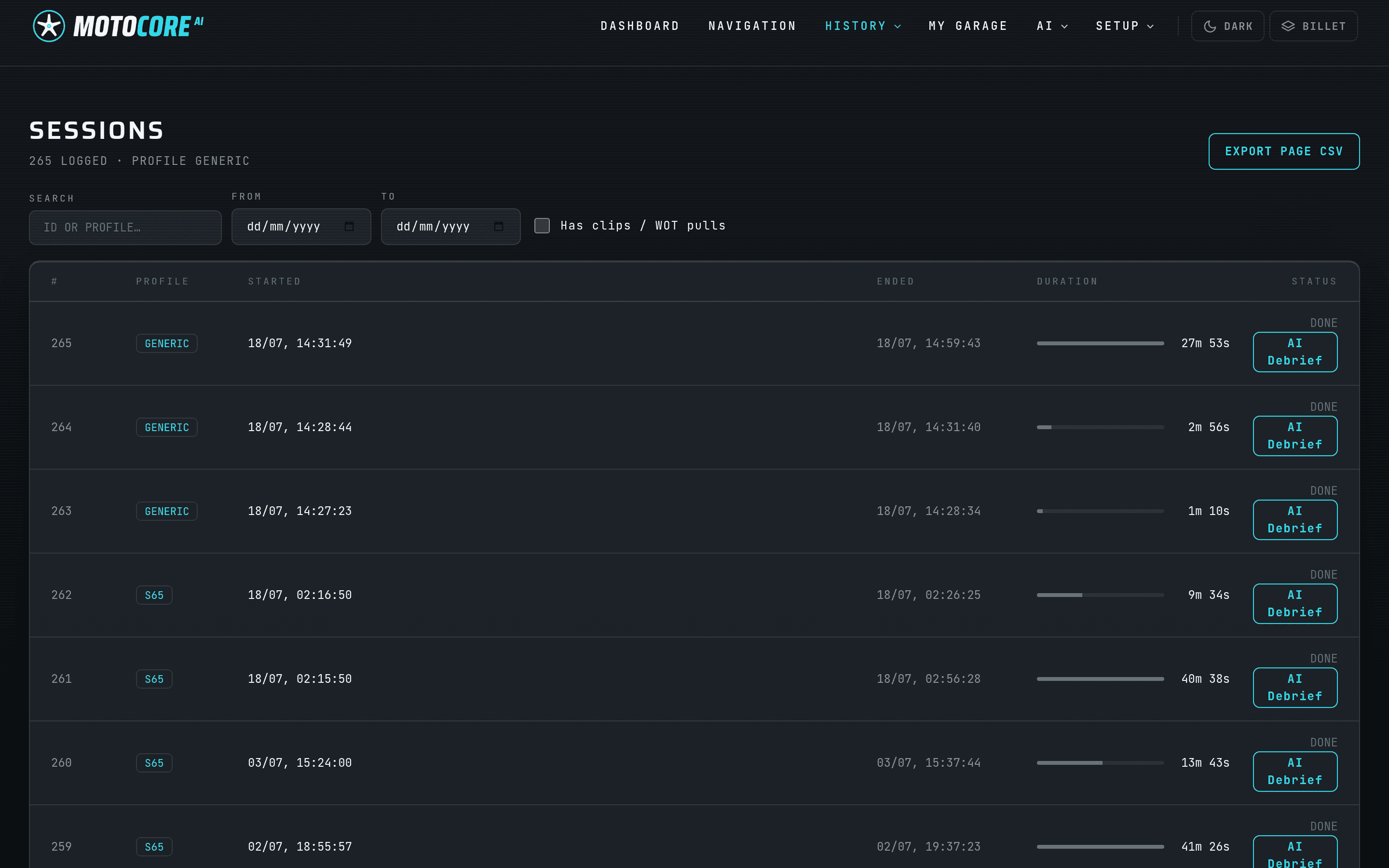
The unit logs every drive into its own on-board database. Pulls, scores and reviews are all views over that one honest record, searchable and exportable from the web app.
- Every channel kept. RPM, speed, temperatures, trims, O2 and more, row by row.
- Filter and export. Search by profile or date, export to CSV.
- Feeds the AI. Session data grounds the debriefs and datalog reviews on the AI page, powered by Anthropic Claude.
Performance questions.
Can it measure 0-60 and quarter-mile times?
Yes. Every wide-open-throttle pull becomes a WOT report with acceleration times, and there is a sprint timer, a sector and lap timer and a G-meter. GPS-based timing uses the GPS Module.
What is the virtual dyno?
It computes power and torque curves from your logged pulls, giving an estimated power figure and a curve to compare runs. It is an on-road estimate from your own data, not a rolling-road reading.
Does it log every run automatically?
Yes. It detects and logs every full-throttle pull without you pressing anything, and keeps the numbers on the unit and in the web app for you to pick over later.
Can I use it as a lap timer on a track day?
Yes. Sector and lap timing, track mode and drive scores are built in, along with pit-wall live sharing and a community leaderboard. Fuel trims, an O2 scope and clutch-slip detection round out the data.
Do I need extra hardware for timing?
GPS-based timing and speed use the optional GPS Module, from £49. Engine data such as rpm, throttle and gear comes over the WiFi OBD2 adapter that MotoCore One already uses.
Numbers you can stand behind.
Measured by the unit, kept in the log, and reviewed by an AI race engineer, powered by Anthropic Claude, when you want a second opinion.